Neuroscience of Mental States and First Person Experience
My research examines consciousness using complementary approaches grounded in data and method. As a neuroscientist, I investigate the neural correlates of conscious states through empirical measurement and analysis of large cohorts. In parallel, I use trained first person observation from meditation to systematically characterize subjective experience under controlled conditions. I also empirically test models that evaluate whether awareness can be explained as an emergent property of brain processes or whether alternative frameworks better account for the observed data.
What is the nature of first-person experience?
The central question guiding my theoretical work is whether consciousness arises from brain activity or depends on mechanisms not fully captured by current neurobiological models. This question motivates both my empirical research and my fiction. The Noetic Particle, my 2026 novel, presents one scientifically grounded framework for models of consciousness explored through narrative rather than academic prose.
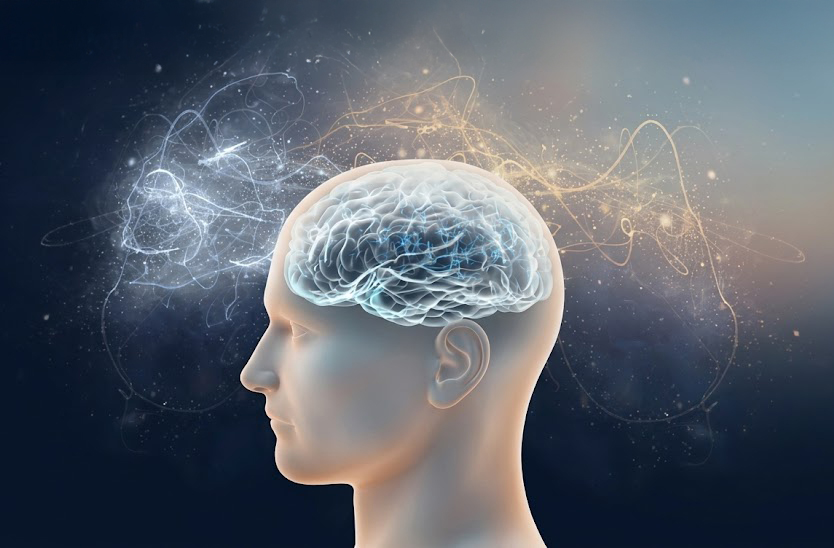
Meditation and brain plasticity
Using high-density EEG, I have studied how long-term meditation practice reshapes brain dynamics. Research at IONS has investigated the neural signatures of focused attention, open monitoring, and non-dual awareness meditation, revealing distinct patterns of cortical activity and connectivity associated with each practice style. These studies contribute to understanding how sustained contemplative training produces lasting changes in brain function.

Mind wandering
Mind wandering -- the spontaneous drift of attention away from a current task -- is a ubiquitous feature of human cognition. My research has mapped different types of mind wandering (intentional, spontaneous, stimulus-dependent) and their distinct neural correlates. This work is synthesized in my 2023 book Why Our Minds Wander, which bridges cognitive neuroscience with practical techniques for attention management.
The Science of Consciousness 2026
I chair The Science of Consciousness 2026, a major interdisciplinary conference bringing together neuroscientists, philosophers, physicists, and clinicians to address the fundamental nature of conscious experience. Held annually since 1994, the conference spans topics from neural correlates of consciousness and anesthesia to quantum approaches, artificial intelligence, and contemplative traditions. CS2026 continues this tradition with a program designed to bridge empirical research and theoretical frameworks across disciplines.

Selected publications
For a full list, see the Publications page. Key consciousness-related papers include work on meditation EEG dynamics, mind wandering taxonomy, and theoretical frameworks for fundamental consciousness.